Last-minute negotiations having failed to avert conflict, the battle [of Shrewsbury] began about midday on 21 July 1403 with a hail of arrows from the veteran bowmen of the prince's own county palatine of Cheshire. Unfortunately for him, they had taken the rebel side and he was on the receiving end. As the royal army struggled up the slope, the Welsh and Cheshire archers drew 'so fast that...the sun which at that time was bright and clear then lost its brightness so thick were the arrows' and Henry's men fell 'as fast as leaves fall in autumn after the hoar-frost'. An arrow struck the sixteen-year-old prince full in the face but he refused to withdraw, fearing the effect it would have on his men. Instead he led the fierce hand-to-hand fighting that continued until nightfall...
A way had to be found of extracting the arrow that had entered his face on the left side of his nose. The shaft was successfully removed but the arrowhead remained embedded six inches deep in the bone at the back of his skull. Various 'wise leeches' or doctors were consulted and advised 'drinks and other cures', all of which failed. In the end it was the king's surgeon, a convicted (but pardoned) coiner of false money, John Bradmore, who saved the prince and the day. He devised a small pair of hollow tongs the width of the arrow-head with a screw-like thread at the end of each arm and a separate screw mechanism running through the centre. The wound had to be enlarged and deepened before the tongs could be inserted and this was done by means of series of increasingly large and long probes...When Bradmore judged that he had reached the bottom of the wound he introduced the tongs at the same angle as the arrow had entered, placed the screw in the centre and manouevred the instrument into the socket of the arrowhead. 'The, by moving it to and fro, little by little (with the help of God) I extracted the arrowhead.' ...
The pain the prince must have suffered in the course of this lengthy operation is unimaginable...
- from Agincourt by Juliet Barker
Showing posts with label Images. Show all posts
Showing posts with label Images. Show all posts
Jul 12, 2018

Jul 18, 2017
To this post a figure was tied
The room had been fashioned into a small museum, and the walls were lined by a number of glass-topped cases full of that collection of butterflies and moths the formation of which had been the relaxation of this complex and dangerous man. In the centre of this room there was an upright beam, which had been placed at some period as a support for the old worm-eaten baulk of timber which spanned the roof. To this post a figure was tied, so swathed and muffled in the sheets which had been used to secure it that one could not for the moment tell whether it was that of a man or a woman. One towel passed round the throat and was secured at the back of the pillar. Another covered the lower part of the face, and over it two dark eyes - eyes full of grief and shame and a dreadful questioning - stared back at us.
- a strange image from the mostly banal The Hound of the Baskervilles, Arthur Conan Doyle, pg. 160, 1902. Reminiscent of John Fowles' novel The Collector.
- a strange image from the mostly banal The Hound of the Baskervilles, Arthur Conan Doyle, pg. 160, 1902. Reminiscent of John Fowles' novel The Collector.
Jan 23, 2013
all of it stage-lit by the harsh orange glare of new street lamps
"So at City Hall, she changed buses and began the long ride out to Ballymacarret. This time, the bus was almost empty as it rushed through the gritty gloom of evening, down grey drab streets, fringed by row upon row of mean little working-class houses, brick red, stone grey, each and every one the same. At each window, between fraying lace curtains, a coloured vase, a set of Union Jacks, or a figurine of a little girl holding her skirts up to wade, sat like little altars, turned towards the street for the edification of the neighbours.
She got off at the usual place, a stop near a factory. She walked along a street of tiny houses, tiny gimcrack shops, all of it stage-lit by the harsh orange glare of new street lamps. ..."
- Brian Moore, The Lonely Passion of Judith Hearne, 1955. A satisfyingly gloomy book, precisely written and sympathetically rendered.
She got off at the usual place, a stop near a factory. She walked along a street of tiny houses, tiny gimcrack shops, all of it stage-lit by the harsh orange glare of new street lamps. ..."
- Brian Moore, The Lonely Passion of Judith Hearne, 1955. A satisfyingly gloomy book, precisely written and sympathetically rendered.
Nov 28, 2012
There are many interesting illustrations to be found at http://goldenagecomicbookstories.blogspot.com/
Edit: this blog seems to have been taken down.

Edit: this blog seems to have been taken down.

Nov 21, 2012
A few photographs...


First man on the moon

Nov 10, 2012
Buildings

- The Rockefeller Center on December 5, 1933. From here.

The Eiffel Tower in 1900, the year of the Exposition Universelle. From here.
Jul 12, 2012

Jun 27, 2012
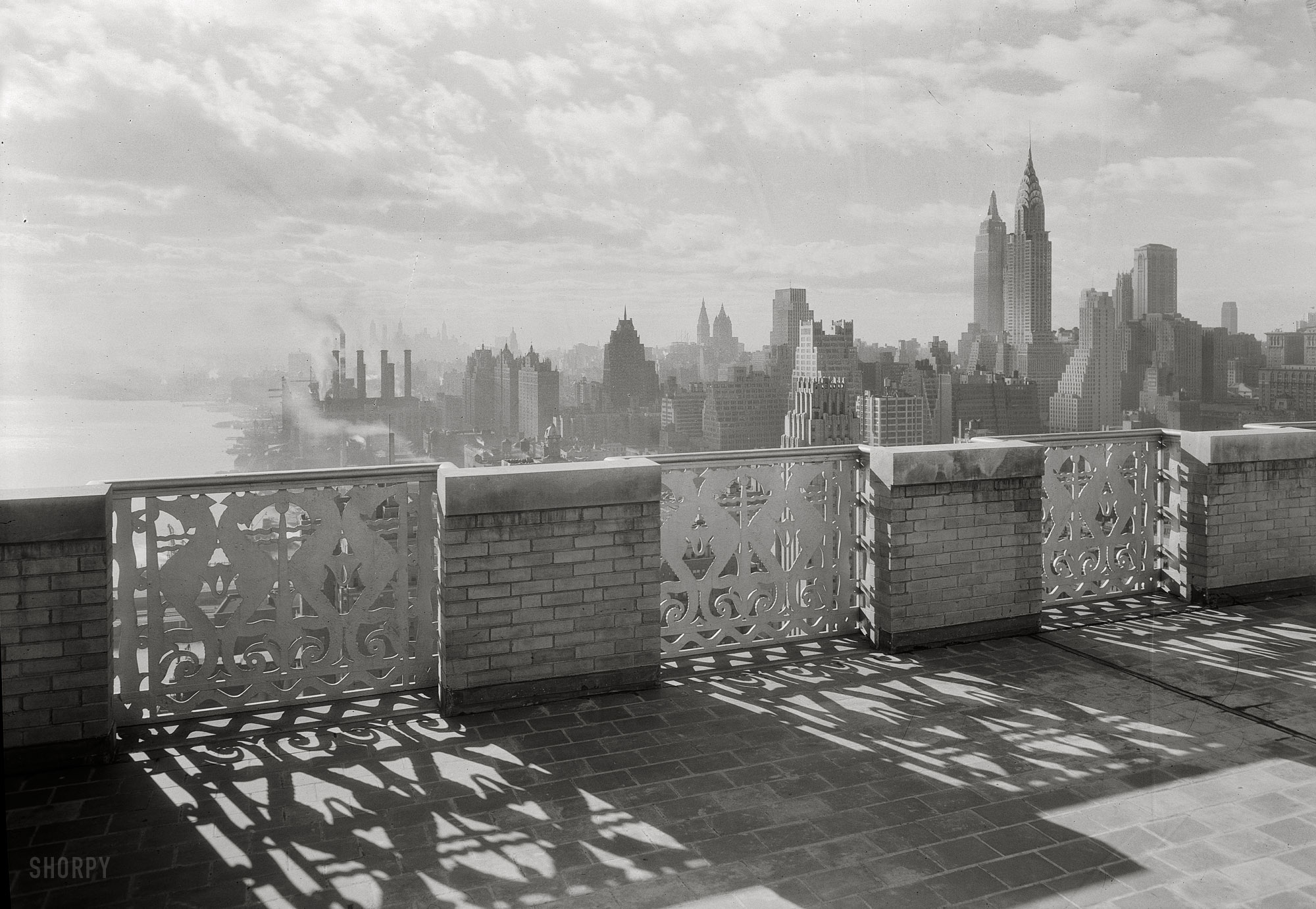
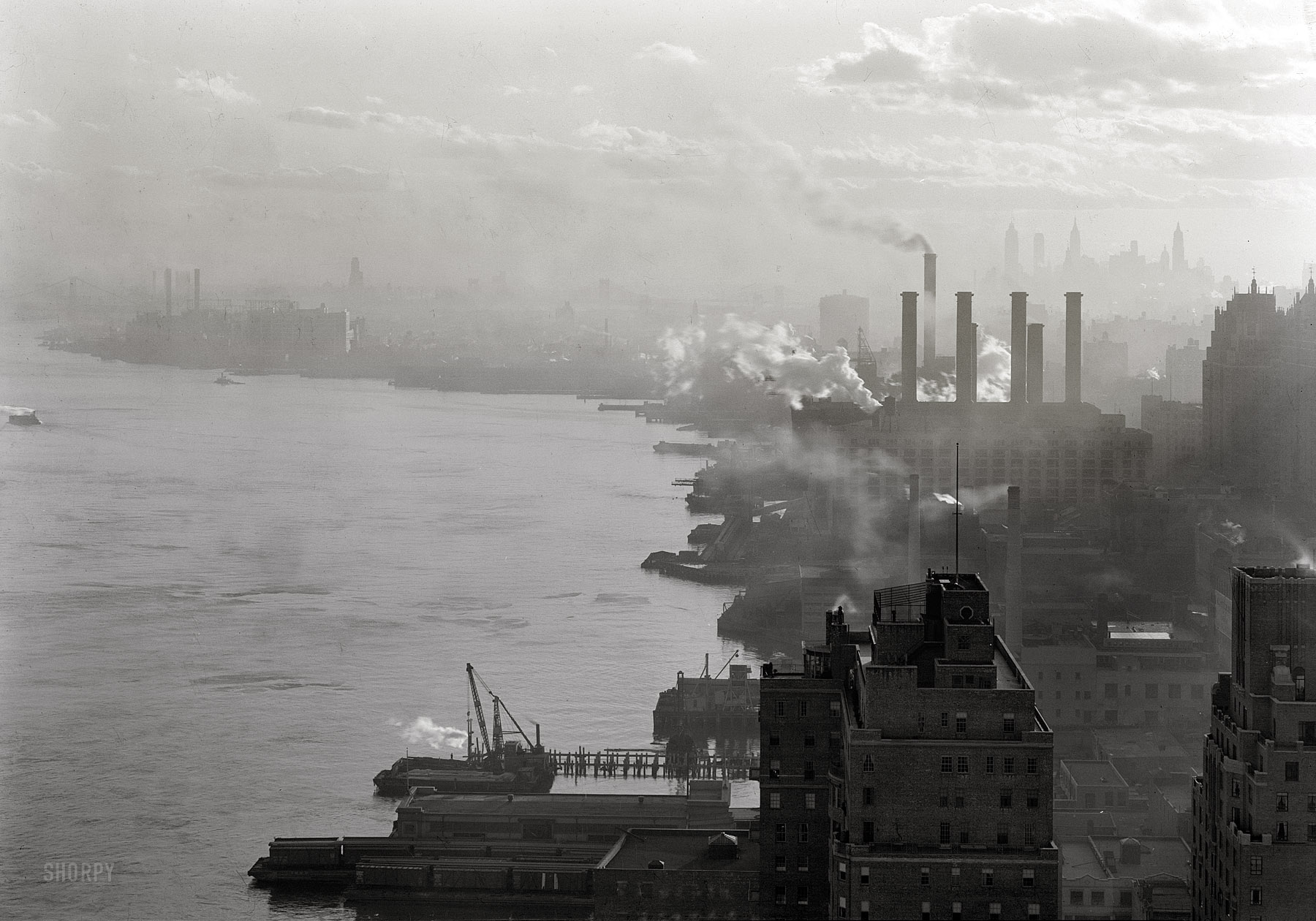
"He went back to his desk and finished his column, then started for the park. He sat down on a bench near the obelisk to wait for Mrs. Doyle. Still thinking of tents, he examined the sky and saw that it was canvas-colored and ill-stretched. He examined it like a stupid detective who is searching for a clue to his own exhaustion. When he found nothing, he turned his trained eye on the skyscrapers that menaced the little park from all sides. In their tons of forced rock and tortured steel, he discovered what he thought was a clue.
Americans have dissipated their racial energy in an orgy of stone breaking. In their few years they have broken more stones than did centuries of Egyptians. And they have done their work hysterically, desperately, almost as if they knew that the stones would some day break them."
- Nathanael West, Miss Lonelyhearts, 1933.


Americans have dissipated their racial energy in an orgy of stone breaking. In their few years they have broken more stones than did centuries of Egyptians. And they have done their work hysterically, desperately, almost as if they knew that the stones would some day break them."
- Nathanael West, Miss Lonelyhearts, 1933.
Images from here.
Jun 24, 2012

- Mitchell Jamieson, "Ladders", 1964, from here. This is one of a series of paintings and sketches of the American space effort which originated from a suggestion by James Webb, NASA's administrator from 1961-1968 (those heady years), that artists might turn their collective attentions to mankind's lunar strivings. From the National Air and Space Museum:
"Working together, James Dean, a young artist employed by the NASA Public Affairs office, and Dr. H. Lester Cooke, curator of paintings at the National Gallery of Art, created a program that dispatched artists to NASA facilities with an invitation to paint whatever interested them. The result was an extraordinary collection of works of art proving, as one observer noted, "that America produces not only scientists and engineers capable of shaping the destiny of our age, but also artists worthy to keep them company."
Jun 13, 2012

Jun 7, 2012

May 22, 2012

May 21, 2012

May 20, 2012

May 18, 2012

Apr 12, 2012
Subscribe to:
Posts (Atom)