Jun 27, 2012

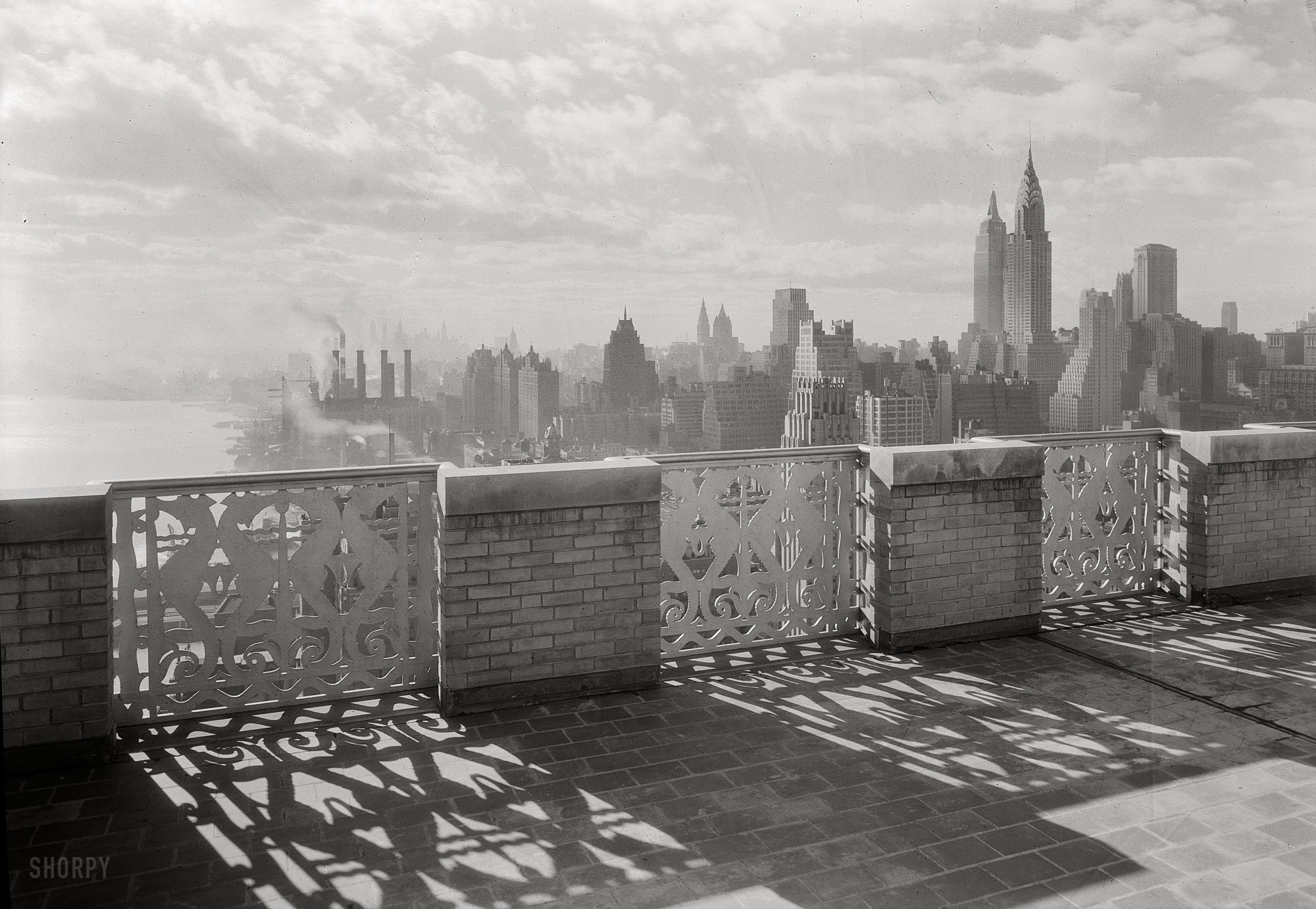
"He went back to his desk and finished his column, then started for the park. He sat down on a bench near the obelisk to wait for Mrs. Doyle. Still thinking of tents, he examined the sky and saw that it was canvas-colored and ill-stretched. He examined it like a stupid detective who is searching for a clue to his own exhaustion. When he found nothing, he turned his trained eye on the skyscrapers that menaced the little park from all sides. In their tons of forced rock and tortured steel, he discovered what he thought was a clue.

Americans have dissipated their racial energy in an orgy of stone breaking. In their few years they have broken more stones than did centuries of Egyptians. And they have done their work hysterically, desperately, almost as if they knew that the stones would some day break them."

- Nathanael West, Miss Lonelyhearts, 1933.


Images from here. 

Jun 24, 2012


- Mitchell Jamieson, "Ladders", 1964, from here. This is one of a series of paintings and sketches of the American space effort which originated from a suggestion by James Webb, NASA's administrator from 1961-1968 (those heady years), that artists might turn their collective attentions to mankind's lunar strivings. From the National Air and Space Museum: 

"Working together, James Dean, a young artist employed by the NASA Public Affairs office, and Dr. H. Lester Cooke, curator of paintings at the National Gallery of Art, created a program that dispatched artists to NASA facilities with an invitation to paint whatever interested them. The result was an extraordinary collection of works of art proving, as one observer noted, "that America produces not only scientists and engineers capable of shaping the destiny of our age, but also artists worthy to keep them company."

Jun 19, 2012

And the hope is not false...


"But, despite all the vocational advisers, the pamphlets pointing out to them what good money you can earn if you invest in some solid technical training - pharmacology, let's say, or accountancy, or the varied opportunities offered by the vast field of electronics - there are still, incredibly enough, quite a few of them who persist in writing poems, novels, plays!... Here in their midst, George feels a sort of vertigo. Oh God, what will become of them all? What chance have they? Ought I to yell out to them, right now, here, that it's hopeless?

But George knows he can't do that. Because, absurdly, inadequately, in spite of himself almost, he is a representative of the hope. And the hope is not false. No. It's just that George is like a man trying to sell a real diamond for a nickel, on the street. The diamond is protected from all but the tiniest few, because the great hurrying majority can never stop to dare to believe that it could conceivably be real."

- from Christopher Isherwood's wonderful A Single Man, 1964.
Jun 13, 2012